

Back in The Sixties Rob “Birdlegs” Caughlan was a young surfer in California. For his college newspaper he interviewed Jacques Cousteau, world famous as co-developer of the Aqua-Lung and a pioneer of marine conservation.” I asked him if he had any good advice for young people who wanted to help protect the ocean. He said, ‘Yes! Don’t follow gurus like me, go out and do it yourself.’”
Caughlan took the advice seriously. “I went on to write my first article on surfer power and beach access for Surfer Magazine in 1970. It encouraged surfers to get active in politics and ocean protection issues.”
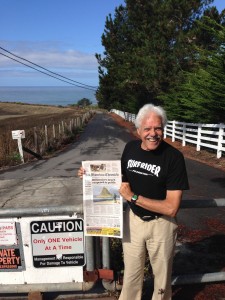
Hmmm, surfers as social activists: that’s not the image most of us may have of these wave-beach-and-sun-loving folks. But we’d be wrong. Surfers care a lot about threats to the ocean and the beaches. In the 1980s, Wikipedia reports, “a handful of surfers” protested threats to their local surf break at Malibu Point. In 1984 they organized the Surfrider Foundation, and two years later Caughlan became the organization’s president. “ We put a lot of energy into increasing membership and our political clout,” he recalled in a 2014 interview for Surfrider . “During my first years leading the organization we grew from 200 members to 25,000.”
In 1991 Surfrider organized its first local chapters of members and, Wikipedia recounts, it became a grassroots activist organization. Today, Surfrider has 50,000 members and 70 chapters worldwide.
Like many activist entities, Surfrider is a member-based nonprofit. It is driven by serving the different value propositions of its members. As Beth Kanter and Allison Fine reported in The Networked Nonprofit , Surfrider offers “a unique model of engagement” that allows members, strangers, volunteers, supporters, and leaders to participate in many different ways. “Strangers and friends can buy T-shirts online and sign up for e-mail alerts. More involved supporters and members can download and listen to podcasts and organize local beach cleanups. Leaders can arrange to meet with elected officials to discuss legislation to protect the shorelines.”
This is the beauty of networked systems, as we explain in chapter 1 of Connecting to Change the World : direct action available to everyone, amplified through collaboration among the members, and sustained by feelings of caring (about the ocean, in Surfriders’ case) and belonging, being a part of something bigger than oneself. “Birdlegs” Caughlan’s commitment to Surfriders–now in its fourth decade–stems from both feelings: “ As surfers,” he explains, “we are bonded to the ocean. It’s a personal affair. Anyone who loves the ocean, as much as we do, must do more to help solve these problems.”
I first met Rob Caughlan a couple of years ago, introduced by a friend who thought I might be interested in and helpful to Rob’s newest passion: natural burial. Yet again, a network was at work helping its members.