
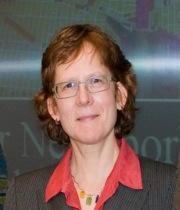
Julia Parzen (former Managing Director, Urban Sustainability Directors Network)
I think I am the low-ego weaver that is described in Connecting to Change the World . When I helped to co-create the Urban Sustainability Directors Network (USDN), my intuition probably was already good. Let the members drive the network and do the work. Listen closely to needs and opportunities. Broker connections. Create “Ah ha” moments.
Still, I didn’t really understand network development and I especially didn’t understand network evolution. From the authors of Connecting to Change the World I learned how to watch the network itself rather than just the people in it, notice the changing patterns of connections, and understanding how to interpret them.
I would have asked some questions because I am a question-asker by nature.
- Who’s connected to whom? Are new connections forming? Who’s not connected but could be?
- Are members getting value from their connections?
- Are network resources flowing to high-energy networking opportunities?
I would not have been methodical about asking these additional questions:
- Where are the hubs and brokers? How can we assist them?
- Where are the bottlenecks? Can we eliminate them?
- Is the intensity of connections changing in ways that demand new network structures?
- Are relationships deep enough that the network can move beyond information sharing to joint production?
- Are clusters emerging? Collaborations advancing?
Asking these questions at least every year when USDN repeated its network-mapping became second nature. In fact, I asked these questions much more often in weekly staff meetings where staff together reviewed the data on participation, satisfaction, and impact.
A network truly is a base for many different activities over time, but someone has to notice when members are ready to be offered a new opportunity or organize around more complex outcomes, as well as when they are done with existing activities.